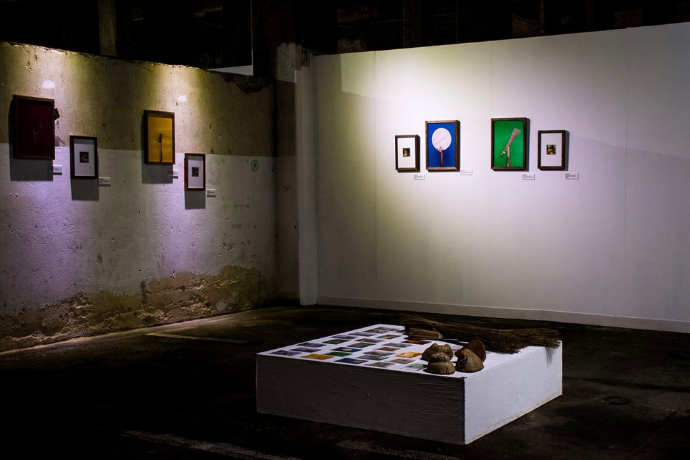
On Saturday evening I had the honour of meeting Zanele Muholi at the opening of their latest exhibition, KANYE NAWE, at Southern Guild. It brought me near to tears to witness, in person, the love and adoration people have for Muholi. It took a solid hour and a half of patient waiting just to find a two minute gap to meet them. They were being pulled left, right and centre by supporters, emerging artists, press, clients, friends and peers, from the moment I arrived until the doors closed.
The exhibition celebrates the 20th anniversary of the ongoing portraiture series Faces and Phases, first started in 2006, a watershed year marked by the passage of South Africa's Civil Union Act, which legalised same sex marriage. The series has since reached over 500 participants, creating a global thread of solidarity. It began with a portrait of the late Busi Sigasa, a proud lesbian mother, poet and activist, and Muholi's friend, who died of HIV after surviving corrective rape, a reality faced by many in South Africa, the so called rape capital of the world.
This essay isn't for the faint of heart, because not all art exists for the beauty of one's heart. Faces and Phases is, in my opinion, the most powerful series in the show, not only visually, but emotionally. If I hadn't known anything about Muholi and had simply wandered into the gallery, I would have thought it was a birthday party: people dancing, singing, cutting cake, giving speeches, dressed to the nines. So many of the series' participants were there, posing beside their own portraits, smiling, celebrating a truth that is both incredibly hard and incredibly beautiful. What a thing to witness: joy in the celebration of individuality, injustice memorialised and turned into pride.
One chant, one energy, all stomping together.
Being in that room, caught up in its energy, could have felt out of place for someone not from this country, who hasn't lived anything close to what many people there have lived. But it didn't. I felt like a spectator, and at the same time I felt the joy of witnessing the pride people can hold for one another, a pride built on real love and real understanding that our individuality is what connects us. This body of work isn't only for the participants and the artist. It's for all of us: to feel, if only for an evening, what it means to be ostracised, and what it means to be truly seen.
How powerful, to create such joy and celebration in a room full of so many different people from so many different backgrounds: one chant, one energy, all stomping together.
And that, perhaps, is the real portrait Muholi has built: not one face, but hundreds, held together by the same unshakeable insistence on being seen. I left that evening still buzzing, grateful to have simply been in the room.